


A Guide to Car Electrical Problems and Warning Signs

A vehicle that will not start in your driveway before work is more than an inconvenience. Dim headlights, a clicking sound when you turn the key, or a warning light that appears and disappears can all point to an electrical issue. This guide to car electrical problems can help Visalia drivers recognize the common signs, understand what may be happening, and know when it is time for professional diagnostics.
Modern vehicles rely on electrical systems for far more than starting the engine. The battery, alternator, starter, fuses, wiring, sensors, lights, charging ports, power windows, and computer modules all work together. A problem in one area can sometimes look like a problem somewhere else, which is why guessing can lead to unnecessary repairs.
Start With the Symptoms, Not the Part
Electrical problems do not always have one clear cause. A dead battery may be the result of an aging battery, but it can also be caused by a weak alternator, corroded connections, a loose cable, or a component that keeps drawing power after the vehicle is turned off.
Pay attention to when the issue occurs. Does the vehicle only struggle to start in the morning? Does it happen after short trips, after sitting for a few days, or only when the air conditioning and headlights are on? Does a warning light come on while driving? Those details give a technician a better starting point and can shorten the diagnostic process.
A few common patterns are worth knowing:
A rapid clicking sound with no engine crank often points to a weak battery or poor battery connection.
One solid click or no sound at all can indicate a starter, relay, ignition switch, battery, or cable issue.
Headlights that dim at idle and brighten when you accelerate may suggest a charging-system problem.
Electrical accessories that work intermittently may be related to a fuse, relay, switch, wiring connection, or control module.
The symptoms provide clues, but they do not confirm the failed part. Proper testing matters.
Battery Problems: Common but Not Always Simple
The battery supplies the power needed to start the vehicle and supports the electrical system when the engine is off. Heat is especially hard on batteries in the Central Valley, and a battery can lose capacity long before it looks damaged from the outside.
Signs of a weak battery include slow cranking, interior lights that seem dim, a battery warning light, or needing a jump-start more than once. White, blue, or green corrosion around battery terminals can interfere with the connection even when the battery itself still has usable charge.
Before replacing a battery, it should be tested. A battery can show enough voltage to light the dash but still fail under the load required to start the engine. Battery age also matters. Many automotive batteries last around three to five years, though driving habits, weather, and vehicle electrical demands can shorten that timeline.
If you need repeated jump-starts, do not assume a new battery is the only answer. The vehicle may not be recharging it correctly, or there may be a parasitic draw draining it while parked.
What Is a Parasitic Draw?
A parasitic draw is electrical power being used after the vehicle has been shut off. Some draw is normal. The clock, alarm system, and computer memory need a small amount of power. The concern is an excessive draw caused by something such as a light staying on, a faulty module, a stuck relay, aftermarket wiring, or a charging accessory left plugged in.
This issue is often frustrating because the car may run normally after a jump-start, then have a dead battery again the next morning. Finding the cause usually requires methodical testing rather than replacing parts one at a time.
Alternator Issues Can Leave You Stranded While Driving
Once the engine is running, the alternator recharges the battery and powers the vehicle's electrical system. If the alternator is weak or failing, the battery gradually takes over. Eventually, there is not enough power left to keep the engine and electronics operating.
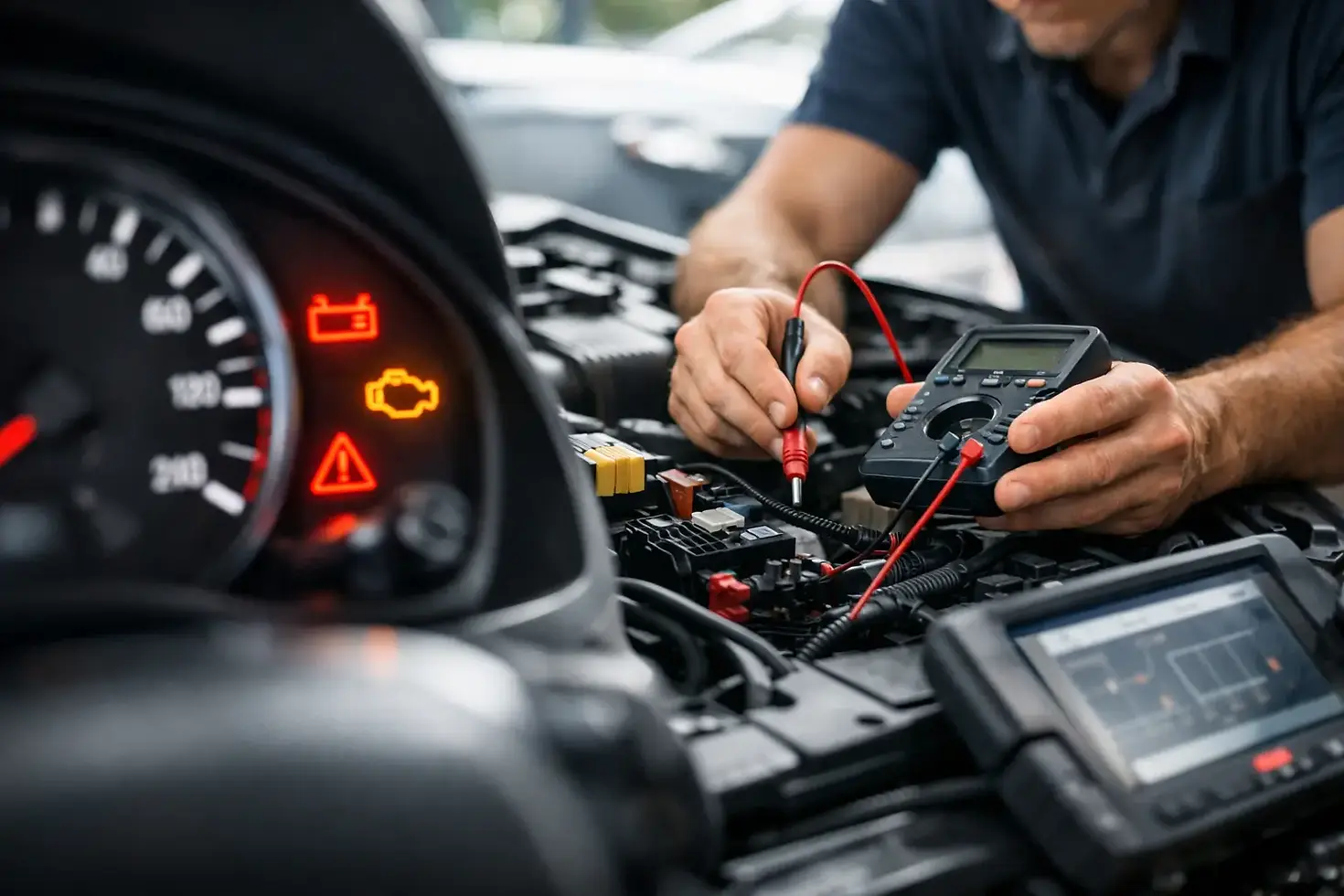
A battery-shaped warning light on the dashboard does not always mean the battery itself is bad. It often means there is a charging-system issue. Other signs may include flickering lights, a burning-rubber smell from a slipping belt, unusual whining noises, power windows moving slowly, or warning lights appearing together.
Do not keep driving for long if the battery warning light comes on, especially if other electrical functions begin acting strangely. Depending on the vehicle and the failure, it may continue running for a short distance or shut down unexpectedly once battery power is depleted. Pull over safely and arrange an inspection instead of risking a roadside breakdown.
Starter, Cables, and Connections
The starter uses battery power to crank the engine. When a starter begins to fail, you may hear a click when turning the key or pressing the start button, but the engine will not crank. In some cases, the vehicle starts after several attempts and then becomes less reliable over time.
However, a no-start condition is not automatically a failed starter. Loose battery terminals, damaged cables, poor engine grounds, a weak battery, a bad relay, or an ignition system issue can create similar symptoms. That is why a starter should be tested along with the battery and charging system.
Battery cables deserve closer attention than many drivers give them. Corrosion can travel underneath the cable insulation where it is not easy to see. A connection may look acceptable from above but fail when the starter demands high current. Cleaning and tightening connections can sometimes solve the issue, but swollen, damaged, or heavily corroded cables should be replaced.
Fuses, Relays, and Wiring Problems
Fuses protect electrical circuits from overload. When a fuse blows, a specific feature may stop working, such as the radio, power outlet, horn, wipers, interior lights, or power windows. Replacing a blown fuse with the correct type and rating may restore the circuit, but a fuse that blows again is a warning that there is an underlying short or overloaded component.
Never install a larger fuse to make a problem go away. That can allow too much current through the circuit and damage wiring or components. It can also create a safety risk.
Relays are electrical switches that control higher-current components such as cooling fans, fuel pumps, headlights, and the starter circuit. A failing relay can cause an intermittent problem that feels random. Wiring issues can be even harder to trace because they may be caused by rodent damage, moisture intrusion, worn insulation, collision damage, or a previous repair.
Modern vehicles also use control modules and communication networks. If multiple unrelated systems stop working at once, the cause may be more than a simple fuse. Accurate diagnostics are especially valuable in these situations.
When You Can Check It Yourself
There are a few safe checks most drivers can make before scheduling service. With the engine off, look for loose battery terminals, visible corrosion, damaged cable insulation, or a dome light that stays on. Check whether the headlights, dash lights, and accessories behave differently before and after starting the engine.
You can also check the owner's manual for the location of fuse panels and the description of each fuse. If a fuse is visibly broken, replace it only with an identical amperage rating. If it fails again, stop replacing fuses and have the circuit inspected.
Avoid probing wires, bypassing fuses, or disconnecting components at random. Many newer vehicles store diagnostic trouble codes, and improper testing can create additional faults or erase useful information. If there is smoke, a burning smell, hot wiring, repeated fuse failures, or a battery that becomes unusually hot, do not drive the vehicle.
Get the Right Diagnosis Before Replacing Parts
Electrical repair is one area where the cheapest guess can become the most expensive fix. Replacing a battery, alternator, or starter without testing may temporarily change the symptoms while the original cause remains.
A professional inspection can include battery load testing, charging-voltage testing, starter draw testing, cable and ground checks, fuse and relay inspection, code scanning, and parasitic-draw testing when needed. The right tests depend on the symptoms and the vehicle. A simple bad terminal is a very different repair from a wiring fault or module issue.
For drivers who cannot easily make it to a shop, James Mobile Auto Repair can help with convenient diagnostics and repair support, while more involved electrical work can be handled with shop-based capability when needed. The goal is straightforward: identify the real fault, explain the repair clearly, and help you get back on the road with confidence.
A warning light or slow start is your vehicle asking for attention before it becomes a missed shift, a school pickup problem, or a roadside call. Address the early signs, and you have a much better chance of fixing the issue on your schedule.


Comments