


Best Warning Signs of Coolant Leaks to Watch

A coolant leak can turn a normal drive across Visalia into an overheating emergency faster than many drivers expect. Knowing the best warning signs of coolant leaks gives you a chance to protect your engine, avoid a roadside breakdown, and address a smaller repair before it becomes an expensive one.
Coolant, also called antifreeze, circulates through the engine and radiator to control temperature. When its level drops, your vehicle may still seem fine for a few days. But California heat, stop-and-go traffic, and long commutes can quickly expose a cooling system that is losing fluid. The goal is not to diagnose every issue yourself. It is to recognize when your car needs attention and when it is safer to stop driving.
Best Warning Signs of Coolant Leaks
A colored puddle beneath your vehicle
The most obvious sign is liquid on the ground after your vehicle has been parked. Coolant is often bright green, orange, pink, red, blue, or yellow, depending on the type used in your vehicle. It may feel watery or slightly slick, and it can have a sweet smell.
Do not assume every puddle is coolant. Clear water near the passenger side is often normal air-conditioner condensation, especially during a hot Central Valley afternoon. Engine oil is usually dark brown or black, while transmission fluid is often red. Still, any recurring colored puddle under the front of your vehicle deserves a professional inspection.
Coolant is toxic to pets and children, even in small amounts. Keep them away from the spill, clean it carefully if it is safe to do so, and do not let the problem wait simply because the vehicle is still running normally.
The temperature gauge is climbing higher than usual
Your temperature gauge is one of the most useful warnings on the dashboard. On most vehicles, the needle should stay around the middle once the engine is warmed up. If it starts moving above its usual position, rises while sitting in traffic, or approaches the hot zone, low coolant could be part of the problem.
A high temperature reading does not always mean there is an external leak. A stuck thermostat, failing cooling fan, weak water pump, or clogged radiator can also cause overheating. But because coolant loss is common and potentially damaging, it should be checked promptly.
If the gauge reaches the red zone or an overheating warning appears, pull over safely as soon as possible and turn the engine off. Do not keep driving in hopes that the temperature will come back down. Severe overheating can damage head gaskets, warp cylinder heads, and create repair costs far beyond the original leak.
Steam or a sweet smell from under the hood
Steam rising from the hood is a clear reason to stop driving. It can occur when coolant leaks onto hot engine components or when the system becomes hot enough to push fluid out under pressure. The steam may look like white smoke, but it often carries a sweet, chemical odor.
Never open the radiator cap or coolant reservoir cap while the engine is hot. The cooling system is pressurized, and hot coolant can spray out and cause serious burns. Let the vehicle cool completely before checking anything under the hood. When in doubt, call for roadside assistance or arrange a mobile inspection instead of taking chances.
A low coolant level in the reservoir
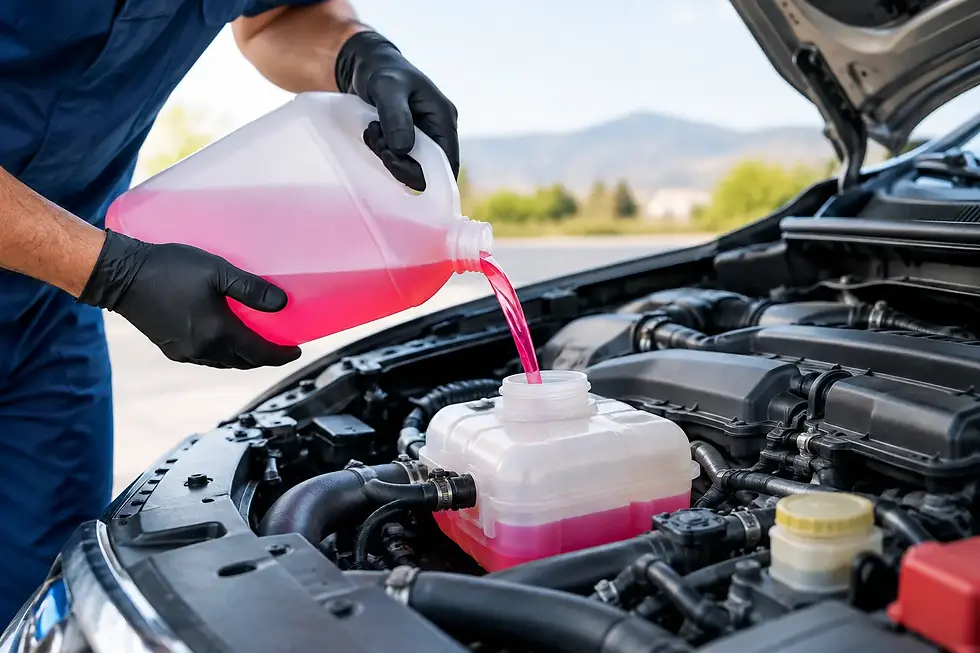
Many vehicles have a translucent coolant reservoir with “MIN” and “MAX” markings. With the engine cold and parked on level ground, you may be able to see whether the fluid level is below the minimum line. A low level is one of the clearest warning signs that coolant has escaped, although it does not reveal where the leak is coming from.
Some drivers top off the reservoir and continue driving. That may get the level back up temporarily, but it does not repair the source of the loss. A loose hose clamp, cracked hose, leaking radiator, damaged reservoir, failing water pump, or worn gasket can all allow coolant to escape. Adding fluid repeatedly can also hide a developing issue until the engine overheats.
Use only the coolant type specified for your vehicle. Mixing incompatible coolant formulas can reduce corrosion protection and create problems within the cooling system. If you are unsure what belongs in your vehicle, it is better to ask than to guess.
The heater blows cool air when it should be warm
Your cabin heater relies on hot coolant flowing through a small component called the heater core. If the coolant level becomes too low, there may not be enough fluid moving through that system to provide consistent heat. You may notice the heater blowing cool air, switching between warm and cool, or taking much longer than usual to warm up.
This symptom can also point to a heater control problem or an issue with the blend door inside the dashboard. However, when weak cabin heat appears alongside a low coolant level or a rising temperature gauge, coolant loss becomes much more likely.
Frequent low-coolant warnings or dashboard alerts
Modern vehicles may display a low-coolant message, check-engine light, or temperature warning before the situation becomes severe. Treat these alerts as an early opportunity, not an inconvenience to clear and forget.
A warning that comes and goes is still meaningful. Coolant can shift as the engine warms and cools, so a small leak may not trigger the alert every time you drive. If the message returns after you add coolant, schedule an inspection. The system may need a pressure test to locate a leak that is not obvious from the outside.
White exhaust smoke that does not go away
A small amount of white vapor from the tailpipe on a cool morning can be normal condensation. Thick white smoke that continues after the engine has warmed up is different. It may indicate coolant is entering the combustion chamber and burning inside the engine.
This is one of the more serious possibilities because it can be related to a failed head gasket, cracked cylinder head, or another internal engine problem. Other clues can include a sweet exhaust smell, unexplained coolant loss with no puddle on the ground, rough running, or milky-looking engine oil.
Not every internal coolant issue produces all of these symptoms, so do not wait for a complete list before getting help. Continued driving can make internal engine damage worse.
Visible corrosion, stains, or wet spots around cooling parts
Open the hood only when the engine is cool and look for clues around the radiator, hoses, coolant reservoir, water pump area, and hose connections. Dried white, green, orange, or pink residue can point to coolant that has seeped out and evaporated. You may also see wet hose ends, cracked rubber, swollen hoses, or corrosion around fittings.
Small leaks can be difficult to find because coolant may drip only when the system is hot and pressurized. A technician can inspect the system, check pressure, and identify whether the problem is a simple hose connection or a repair that requires shop equipment.
When You Can Drive and When You Should Stop
It depends on the symptom. A small puddle with a normal temperature gauge may allow you to drive a short distance to a repair appointment, provided the coolant level is safe and there is no steam or warning light. Even then, monitor the gauge closely and avoid long trips, heavy loads, and hot conditions.
Do not continue driving if the engine is overheating, steam is coming from under the hood, the low-coolant warning is active with a high temperature reading, or the vehicle is losing coolant quickly. Pull over in a safe location, turn off the engine, and allow it to cool. Trying to “make it home” can change a hose or radiator repair into major engine work.
For drivers who cannot easily leave work, home, or a family schedule behind, a mobile inspection can reduce the disruption. James Mobile Auto Repair can help identify cooling-system concerns where your vehicle is parked, while more involved repairs can be handled with proper shop support when needed.
A Simple Habit That Can Prevent Bigger Repairs
Check your coolant reservoir periodically when the engine is cold, especially before a road trip or during periods of extreme heat. Pay attention to changes rather than waiting for a warning light. A level that slowly drops, a new sweet smell, or a temperature gauge that is no longer behaving normally is your vehicle asking for attention.
Cooling-system problems are rarely convenient, but catching one early gives you more choices. A timely inspection can keep a small leak from interrupting your day and help you get back on the road with confidence.


Comments