


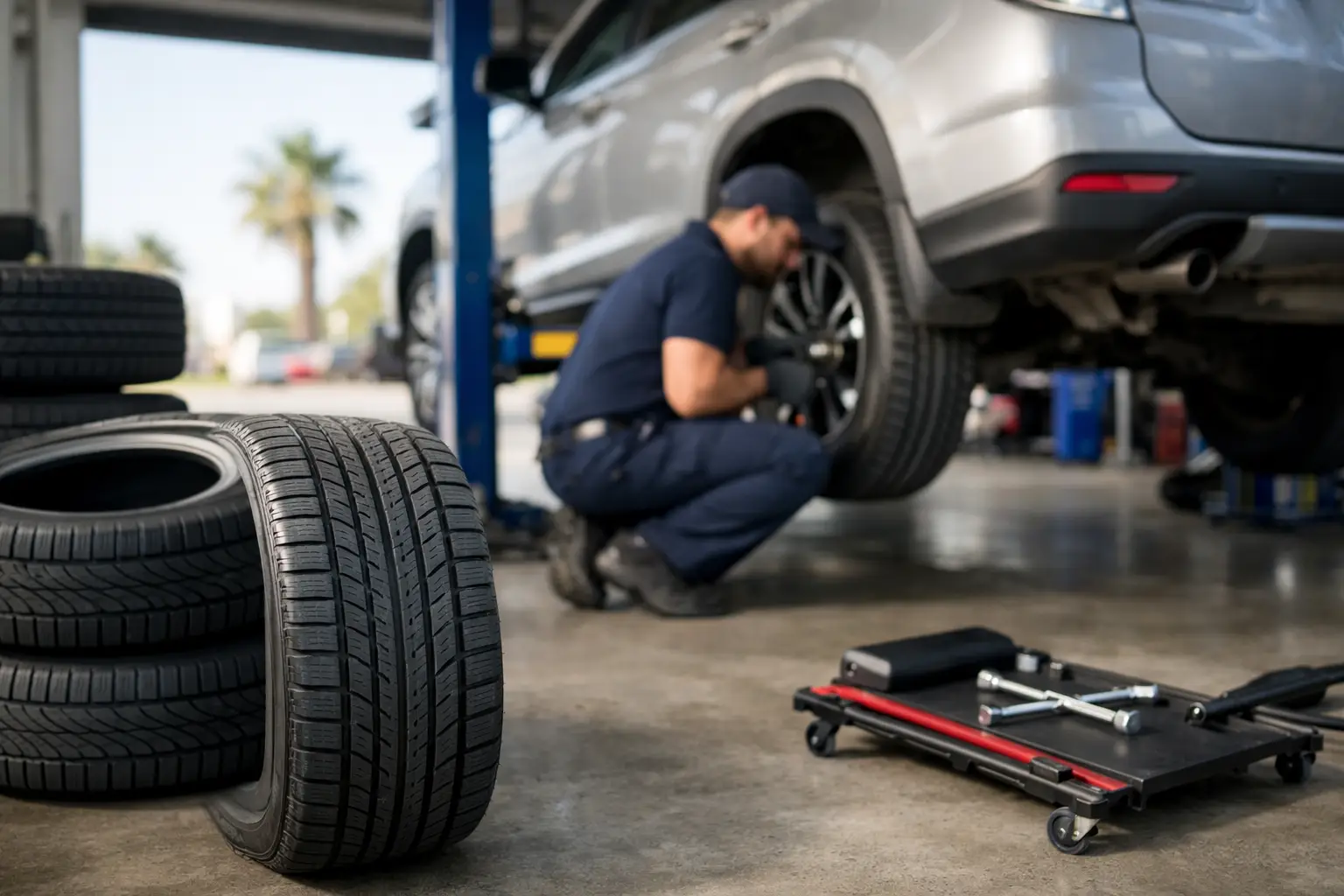
A Practical Guide to Tire Rotation for Visalia Drivers

A set of tires can look fine at a quick glance yet wear unevenly enough to shorten its usable life. This guide to tire rotation explains how moving tires to different wheel positions helps Visalia drivers get more even tread wear, steadier handling, and better value from a major vehicle expense.
For busy commuters, family vehicles, work trucks, and drivers who spend time on Highway 99 or rural Central Valley roads, tire rotation is simple preventive maintenance with a real payoff. It does not fix damaged tires, poor alignment, or worn suspension parts. It does help your tires share the workload more evenly so one or two tires do not wear out long before the others.
What Tire Rotation Does for Your Vehicle
Your tires do not all wear at the same rate. On many front-wheel-drive vehicles, the front tires handle steering, much of the braking force, and the power that moves the vehicle forward. They often wear faster than the rear tires. On rear-wheel-drive trucks and some performance vehicles, the rear tires may wear more quickly because they deliver the engine's power.
Rotating the tires changes where each tire works. Over time, this helps even out normal wear patterns across the set. When tread depth stays closer from tire to tire, your vehicle is more predictable in wet conditions, braking performance is more consistent, and you are less likely to replace only two tires earlier than expected.
There is also a practical financial reason to rotate. Tires are designed to wear down, but uneven wear throws away usable tread. Regular rotation can help you get closer to the tire life you paid for, provided inflation, alignment, and suspension condition are also kept in check.
When Should You Rotate Your Tires?
A common guideline is every 5,000 to 7,500 miles, often at the same time as an oil change. However, the owner's manual for your specific vehicle should lead the decision. Some manufacturers recommend a different interval, and certain tire warranties may require documented rotation at stated mileage intervals.
If you cannot remember the last rotation, do not assume it can wait until the next oil change. Look at the tread. If the front tires appear noticeably more worn than the rear tires, or the vehicle is pulling to one side, it is worth having the tires inspected sooner.
Visalia's hot, dry summers add another reason to stay on schedule. Heat can accelerate tire aging and expose problems with underinflation. Long commutes, rough pavement, frequent stop-and-go driving, heavy loads, and road trips can all affect how quickly tires wear.
Rotate Sooner if You Notice These Signs
Uneven tread does not always mean rotation is the only answer. It can signal a larger issue that needs attention before the tires are moved. Schedule an inspection if you notice any of the following:
One edge of a tire is more worn than the rest of the tread.
The steering wheel shakes, especially at highway speeds.
Your vehicle pulls left or right on a level road.
The tires make a humming, thumping, or unusually loud road noise.
One tire has much less tread than the other three.
Feathering, cupping, or rapid inner-edge wear may point to alignment, balance, suspension, or inflation problems. Rotating without addressing the cause can simply move the problem to another corner of the vehicle.
The Right Rotation Pattern Depends on the Tires
There is no universal tire rotation pattern. The correct method depends on whether your tires are directional, non-directional, staggered in size, or fitted to a front-, rear-, or all-wheel-drive vehicle.
Non-directional tires are the most flexible because they can generally move from one side of the vehicle to the other. A common front-wheel-drive pattern moves the front tires straight to the rear and crosses the rear tires to the front. A rear-wheel-drive pattern often moves the rear tires straight forward and crosses the front tires to the rear.
Directional tires have tread designed to roll in one direction for water evacuation and traction. They should remain on the same side of the vehicle, moving front to rear only. Crossing a directional tire to the other side would reverse its intended rotation unless the tire is removed from the wheel and remounted.
Some vehicles use staggered tires, meaning the rear tires are wider or a different size than the fronts. In many cases, these can only rotate side to side, if at all. Always check the tire sidewall, vehicle manual, and tire manufacturer's instructions rather than relying on a one-size-fits-all diagram.
What About AWD and 4WD Vehicles?
All-wheel-drive and four-wheel-drive vehicles deserve extra attention. Differences in tire circumference can place added stress on drivetrain components. Keeping tread wear even matters, but so does using tires that match in size and remain within the manufacturer's allowed tread-depth difference.
If one tire on an AWD vehicle is damaged beyond repair, replacing a single tire may not always be appropriate. Depending on tread depth and vehicle requirements, the safer choice may be replacing more than one tire or using a properly shaved replacement tire. A technician can measure the remaining tread and explain the options before you spend money.
Tire Rotation Is More Than Swapping Positions
A professional rotation is a good time to inspect the condition of the full tire and wheel assembly. The technician should check tread depth, tire pressure, visible damage, nails or screws, sidewall cracking, and signs of irregular wear. Wheel torque also matters. Lug nuts must be tightened to the vehicle manufacturer's specification, not guessed at or overtightened.
Tire pressure should be set using the pressure listed on the driver's door-jamb placard, not the maximum pressure molded into the tire sidewall. That sidewall number is the tire's maximum capability, not necessarily the correct operating pressure for your vehicle. Check pressure when tires are cold for the most accurate reading.
If your vehicle has a tire pressure monitoring system, it may need to relearn the tire positions after rotation. Some systems identify individual wheel locations, while others only alert you that a tire is low. A proper service visit can confirm that the system is functioning as intended.
Can You Rotate Tires Yourself?
Drivers with the correct tools, a safe level work area, jack stands, a torque wrench, and confidence working around lifted vehicles can rotate some tires at home. The job is not complicated in principle, but safe lifting and correct torque are not optional.
For many drivers, professional service is the more convenient choice. It avoids working in summer heat, handling heavy wheels, and guessing about the right rotation pattern. It also gives you an opportunity to catch a tire problem before it becomes a roadside problem.
Mobile service can be especially helpful for routine maintenance when your schedule is already full, though certain tire concerns may call for shop equipment. Wheel balancing, alignment checks, tire mounting, and repairs that require removing a tire from the wheel are examples of work best handled with the right equipment in a shop setting.
Pair Rotation With the Maintenance That Protects Tires
Rotation works best as part of a bigger tire-care routine. Check tire pressure monthly and before longer drives. Inspect tread depth regularly, including the inner edges that are easy to miss. Have the alignment checked if the vehicle pulls, the steering wheel is off-center, or uneven wear appears.
Do not overlook tire age. A tire can have decent tread and still become less safe as rubber ages, especially in Central California heat. Check the DOT date code on the sidewall and follow vehicle and tire manufacturer guidance about replacement. Cracks in the sidewall, bulges, exposed cords, or repeated pressure loss deserve immediate attention.
At James Mobile Auto Repair, a tire rotation can be a practical starting point for a broader vehicle check. Catching low tread, incorrect pressure, or alignment symptoms early can help prevent an inconvenient breakdown and give you more confidence behind the wheel.
The best time to plan tire service is before the steering starts shaking, the rain arrives, or a worn tire turns a normal commute into an emergency. Put your next rotation on the calendar based on your mileage, and let the condition of your tires guide the next step.


Comments